How much does a new roof cost?
Based on 150 full asphalt shingle roof replacements eRoof completed across Minnesota between 2024 and 2025, most homeowners paid about $14,500–$23,000 for a new roof on a typical home, with the median project coming in around $17,600.
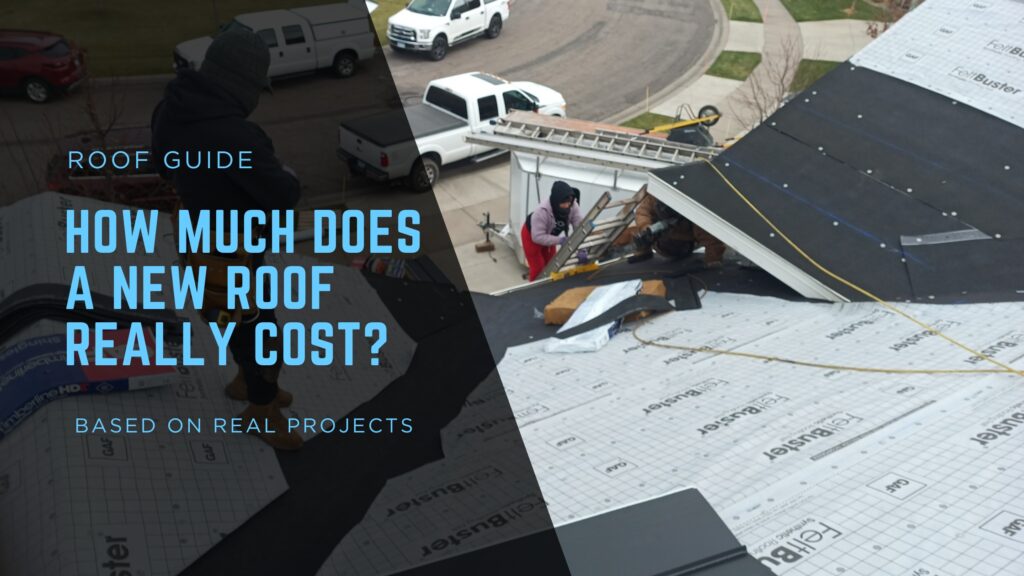
How Much Does a New Roof Cost?
We took the time to go over the data from 150 real asphalt shingle roof replacement jobs we completed between 2024 and 2025 to calculate what homeowners actually pay for a new roof in a real-world setting.
Based on those 150 projects, most full asphalt shingle roof replacements landed between about $14,500 and $23,000, with a median project cost around $17,600.
Why Most Roof Cost Guides Don’t Match Reality
If you Google “roof replacement cost,” you’ll see a lot of:
- “Roofs start at $X…”
- “Average roof is $Y–$Z nationwide…”
Those numbers are often:
- Built on national averages, not your specific region
- Calculated on a very bare-bones scope that assumes everything goes perfectly
In a perfect world, every roof would be a simple:
Tear off → install new shingles → sweep up → done.
But in reality, on most jobs there are at least one or two extras that show up once the old roof is removed. That’s why our dataset includes all of the “normal surprises” that drive real project totals up, like:
- Rotten, delaminated, or gapped roof decking that has to be replaced
- Roof decking that doesn’t meet current building code
- Chimney and wall flashing that’s outdated or improperly installed
- Minor fascia, trim, or siding repair around roof edges
- Vents that need to be added, moved, or upgraded (ridge vents, bath fans, kitchen vents)
- Permits and inspections required by local municipalities
When we say “most homeowners paid between $14,500 and $23,000,” we’re talking about complete, code-compliant projects—not just the cost of shingles.
What Actually Drives the Price Up or Down?
Every roof is different, but these are the major factors we see over and over again.
1. Size and shape of your roof
- Larger homes = more roof area = more materials and labor
- Roofs with lots of hips, valleys, dormers, and cut-up sections are more time-consuming than simple rectangles
- A compact 1,000 sq ft rambler is very different from a 3,000+ sq ft two-story with multiple rooflines
2. Pitch and height
- Steep roofs require more safety measures and take longer to work on
- Two-story homes and tall structures are harder to access than low, walkable roofs
- Steeper, taller, more complex roofs usually land toward the upper end of the price range
3. Decking and structural condition
Building codes in most areas require that the roof deck be solid and properly spaced. Common issues:
- Rotten or soft decking that needs to be replaced
- Older homes with wide board gaps that no longer meet code
- Areas around chimneys, valleys, or low spots where water has caused damage
Sometimes that’s only a couple of sheets of plywood. Other times, large areas need to be re-decked. That can add anything from a few hundred dollars to several thousand, depending on how widespread the problem is.
4. Materials and upgrades
Most jobs in our dataset are architectural asphalt shingles, but prices go up when you add things like:
- Impact-resistant (Class 3 or Class 4) shingles
- Premium underlayments or ice & water shield coverage beyond the code minimum
- Extensive flashing upgrades around chimneys and walls
- Skylight replacements or additions
- Ventilation upgrades (ridge vents, intake vents, bath/kitchen fans)
Those upgrades can absolutely be worth it—especially in hail-prone or heavy-snow areas—but they push a project toward the top of the range.
5. How long it’s been since the last re-roof (code & compliance catch-up)
Roofs can last 20–30 years or more, which means:
- The last time your roof was replaced, local building codes were different
- Products and best practices have changed a lot since then
- Things that were “okay” back then may not pass inspection now
So when we tear off an old roof, we often have to:
- Add more ice & water shield than the original roof had
- Update or add ventilation to meet today’s standards
- Fix flashing details that were never done correctly
- Replace decking that was “grandfathered in” but no longer acceptable under current code
All of that shows up in the final price. You’re not just paying for “new shingles,” you’re bringing a 20–30-year-old roof system up to today’s code and safety standards.
6. Market conditions: materials and labor
Roofing is also affected by broader economic stuff:
- Shingle, underlayment, and lumber prices have seen multiple rounds of increases in the last decade
- Labor costs have gone up as skilled trades have become harder to hire and retain
- Fuel, disposal, and insurance costs for contractors have all climbed
You don’t see these as separate line items, but they’re baked into every quote. It’s one reason a roof that might have been $10k fifteen years ago is much more today, even on the same house.
Typical New Roof Cost Ranges (By Home Size)
All of the ranges below come from our 150-job dataset. The homes are in Minnesota, but these numbers are a solid reference point for similar U.S. markets.
Smaller homes – under ~1,300 sq ft
For smaller homes, townhomes, and compact cabins:
- Most projects: $12,500 – $18,500
- Median project: around $15,000
These roofs tend to be simpler and use less material, but costs still climb when roofs are steep or when there’s a lot of decking and trim repair involved.
“1,500 sq ft” range – roughly 1,300–1,800 sq ft
This is the classic “What does it cost to replace a roof on a 1,500 sq ft house?” band.
- Most projects: $14,500 – $20,000
- Median project: about $16,000
If you own a typical 1,500–1,600 sq ft house, this is a realistic range for a full asphalt shingle replacement that includes code upgrades, flashing, and common extras.
“2,000 sq ft” range – roughly 1,800–2,300 sq ft
Here we’re talking about the classic 2-story or larger rambler.
- Most projects: $15,000 – $23,500
- Median project: around $17,500
This is the heart of our dataset—a really good representation of what a full roof replacement costs on an average-sized home with a modern architectural shingle, proper underlayments, vents, flashing, and permits.
Larger homes – 2,300+ sq ft
As homes get larger (and often more complex), the ranges widen:
- 2,300–2,800 sq ft:
- Most roofs land around $16,500 – $27,500
- Median is around $22,000
- 2,800+ sq ft:
- Many projects come in from the low $20,000s into the low $30,000s
- Big or high-end homes with steep pitches, multiple sections, lots of valleys, and skylights can easily reach $35,000–$50,000+
Even within the same size band, roof complexity, pitch, and upgrades make a big difference.
So… What Will Your New Roof Cost?
Every roof has its own mix of:
- Size
- Shape and pitch
- Decking condition
- Flashing, trim, and ventilation details
- Local labor and material costs
But if you want a realistic starting point based on actual projects, here’s the short version from our data:
- Smaller homes (under ~1,300 sq ft): most land $12,500–$18,500
- Typical homes (~1,300–2,300 sq ft): most land $14,500–$23,000
- Larger, more complex homes: often $20,000–$30,000+, with high-end projects going $35,000–$50,000+
Want a Number That’s Closer to Your Roof?
If you’re just getting started, a ballpark is helpful. If you’re getting ready to budget or compare quotes, you probably want something more specific.
You’ve got two options:
- Use our free online roof estimate tool
eRoof’s free online roof quote tool
uses the same pricing logic behind these 150 projects. It accounts for real roofing scopes—tear-off, underlayments, ice & water shield, vents, and typical code upgrades—so your ballpark number is much closer to what you’ll actually end up paying, not a too-low teaser price. - Talk to us directly
- If you need a roofer in Minneapolis or the surrounding twin cities area: you can schedule an in-person inspection, and we’ll look at your roof, decking, ventilation, and problem areas, then put together a line-by-line proposal.
- If you live outside Minnesota: you can reach out for an online consultation. We can review photos, measurements, and details about your home to help you understand where in these ranges your project is likely to land.
Either way, you’ll be working from real project data, not just a generic “roofs start at…” line that doesn’t survive first contact with an actual tear-off.
- Dataset: 150 completed asphalt shingle roof replacements across Minnesota (2024–2025).
- Final cost source: Final job totals pulled from the client’s invoice records (true completed project totals).
- Home size source: Home square footage pulled from Zillow. (Note: home sq ft is not the same as roof sq ft—it’s used here as a simple way to compare “typical” home sizes.)
- What the totals represent: Full roof replacement projects (not “starting at” teaser prices).
- Privacy: Addresses are not shared publicly; only summarized ranges and size bands are shown.